
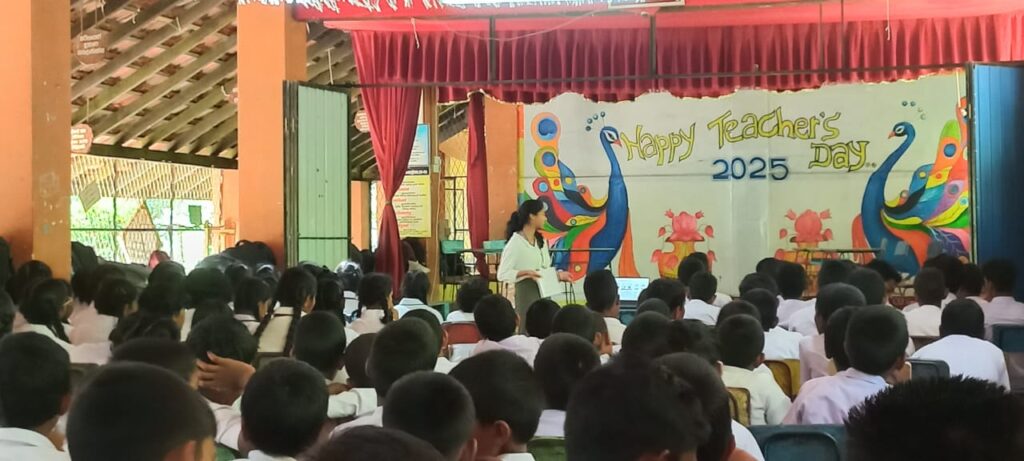
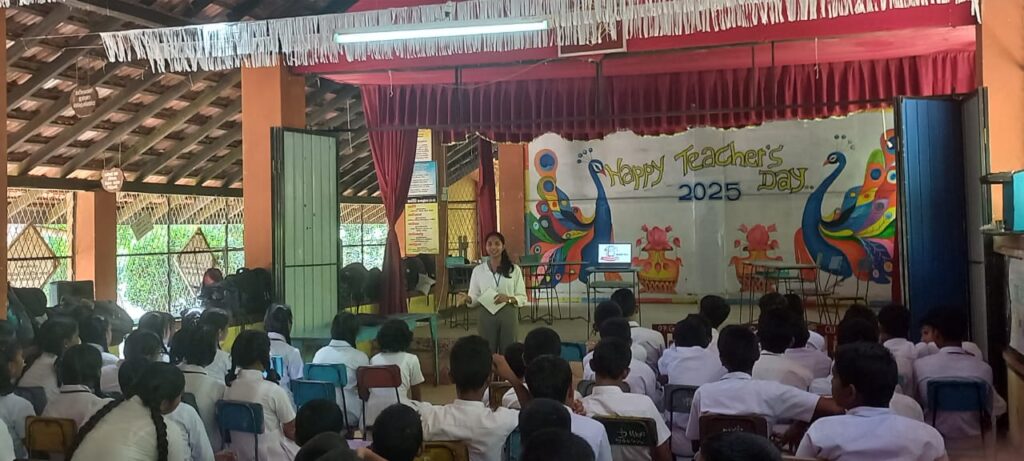
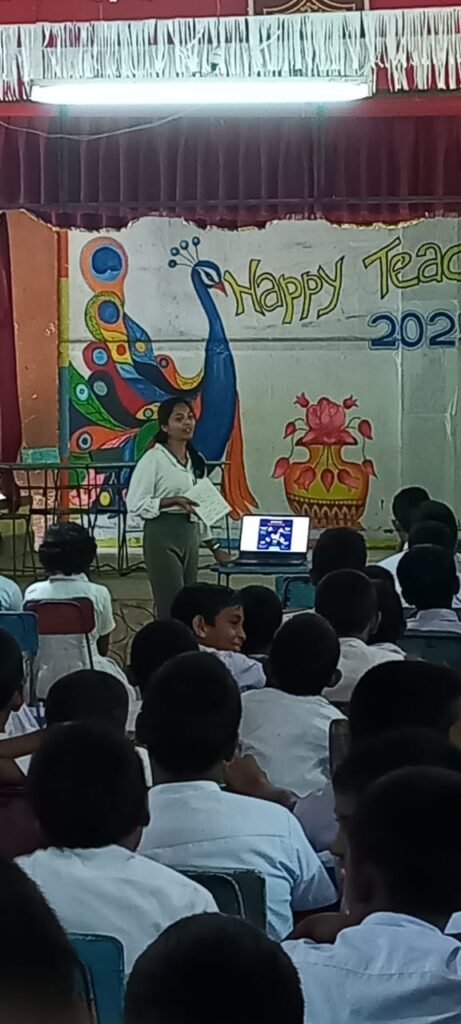
The programme was held at Mologgamuwa Maha Vidyalaya, Kirilipana, targeting students aged 14-16 years. The primary objective was to raise awareness about cyberbullying, help students recognize harmful online behaviors, and empower them with practical strategies to protect themselves and others in digital spaces. A distinctive feature of the programme was the use of short films as an educational tool to encourage discussion and reflection.
During the sessions, students were introduced to the meaning of cyberbullying, with explanations on how it differs from traditional bullying. Through short films, students explored various forms of cyberbullying, including online harassment, spreading rumors, sharing private images without consent, and hate speech on social media platforms. These visual narratives helped students relate to real-life situations and better understand the seriousness of online abuse.
The programme also addressed the current situation of cyberbullying, highlighting how increased internet access, smartphone usage, and social media engagement have made adolescents more vulnerable to digital harm.
A key focus of the discussions was the impact of cyberbullying on mental and physical health. Students learned how cyberbullying can lead to anxiety, stress, fear, low self esteem, sleep problems, and poor academic performance. By analyzing the emotional journeys portrayed in the films, students developed empathy toward victims and a deeper awareness of the long term consequences of online abuse.
The impact of the programme was clearly evident through the students’ active participation and heightened awareness. Students developed a stronger understanding of cyberbullying, its consequences, and their responsibilities as digital citizens. By combining visual storytelling through short films with interactive discussions, the initiative helped promote safer and more respectful online behavior and encouraged positive changes in students’ attitudes and actions.
By W.M.O. Kavindya
Advocate at IFDC